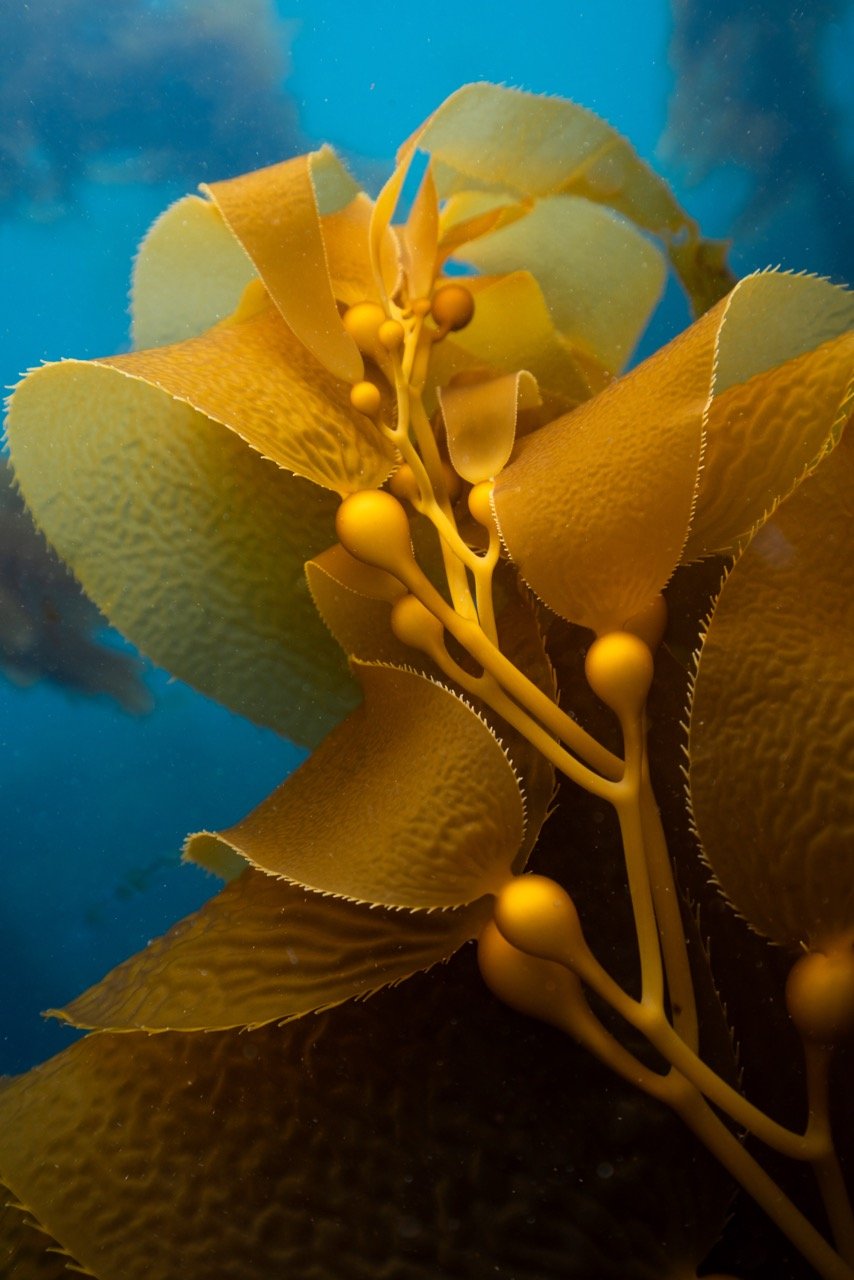
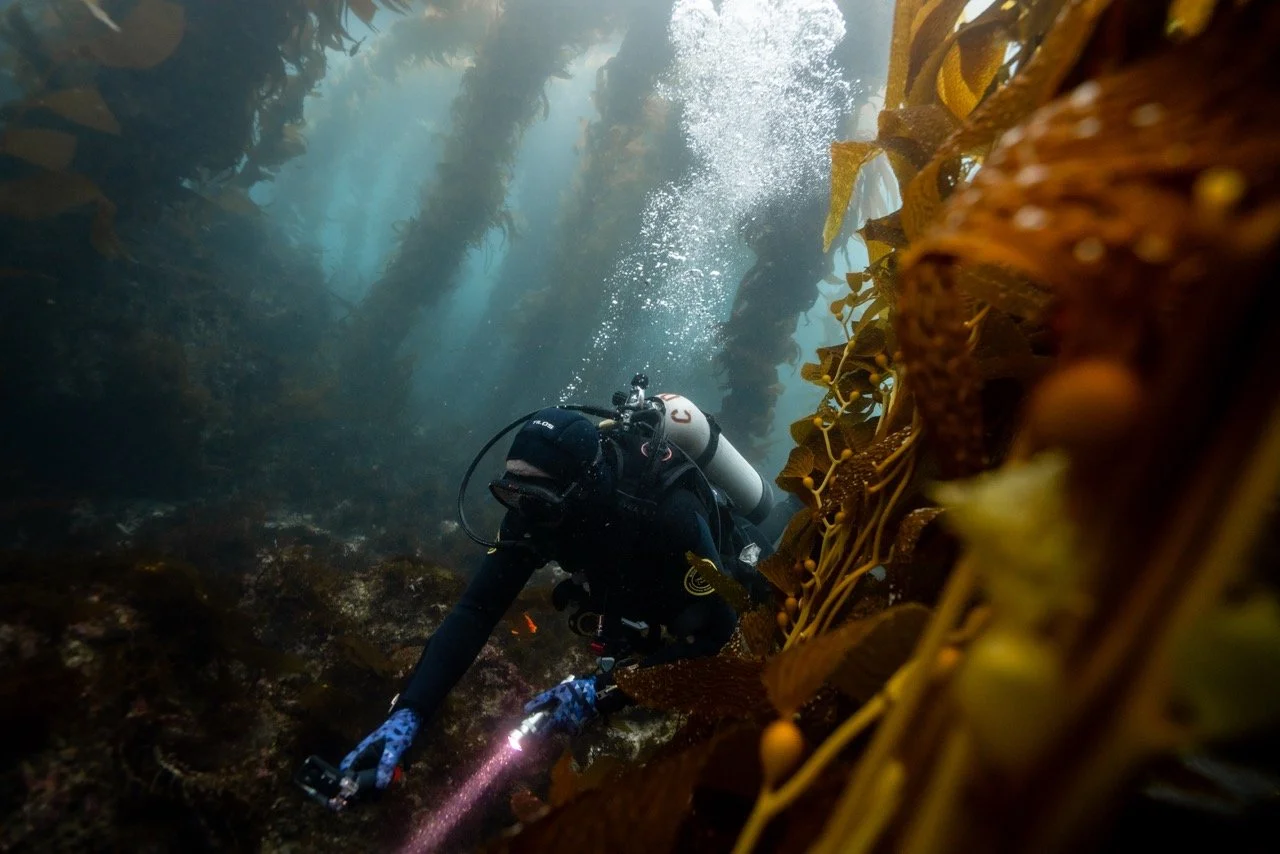
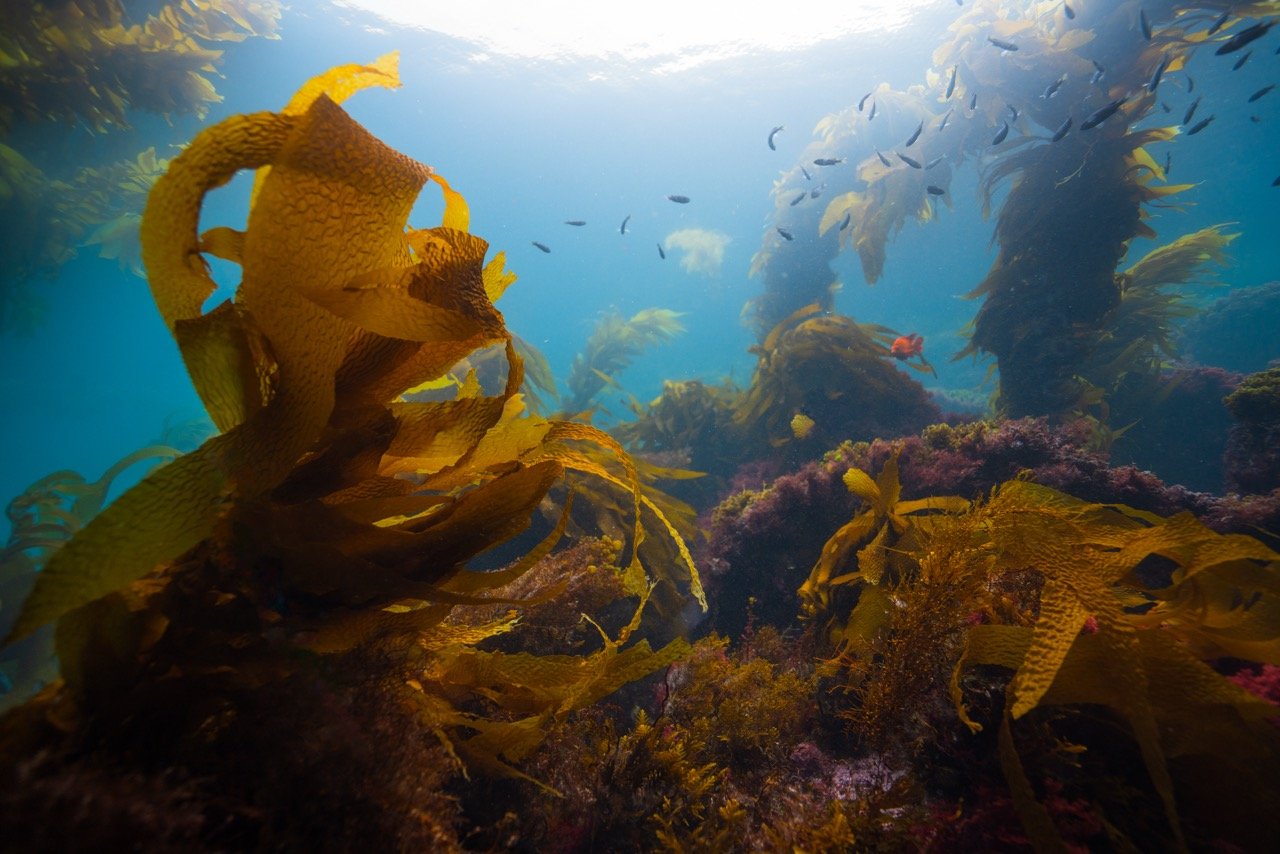
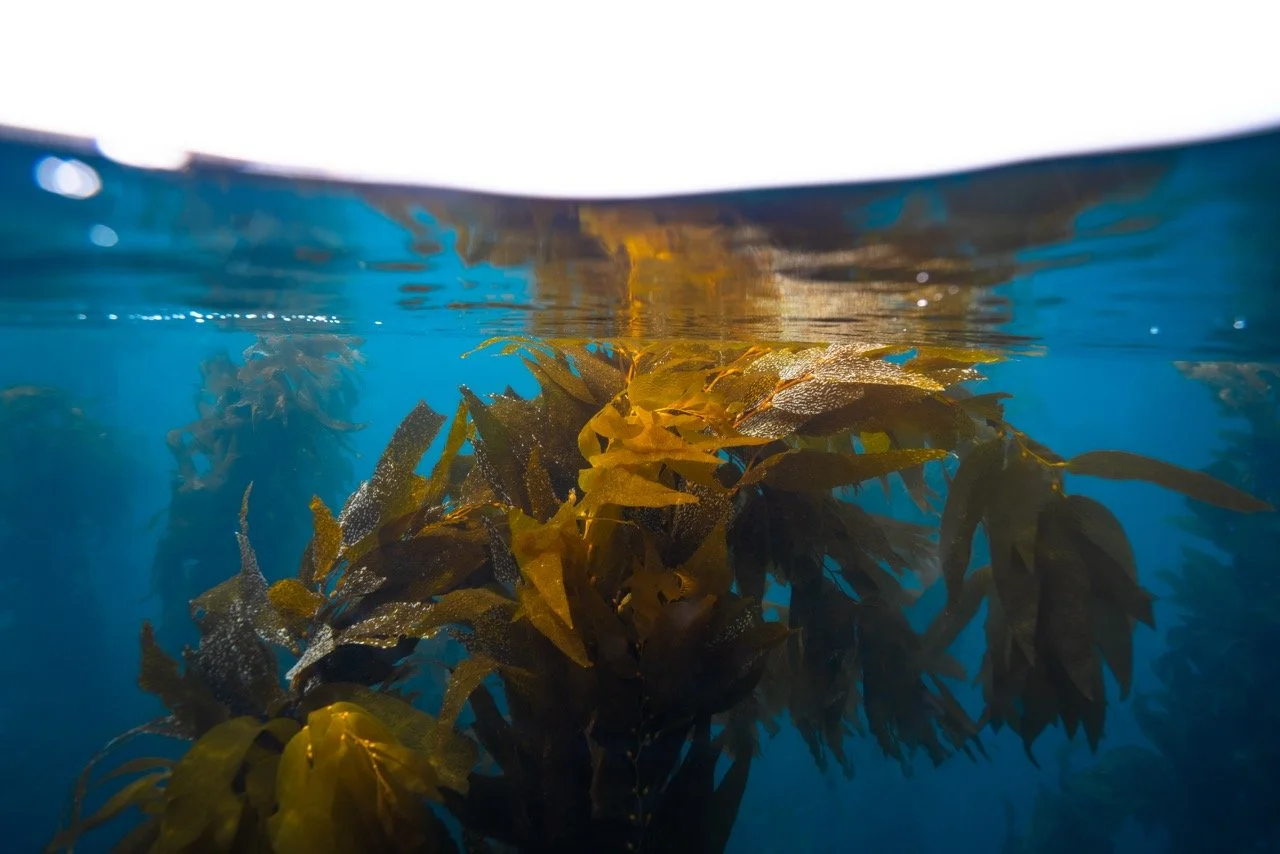
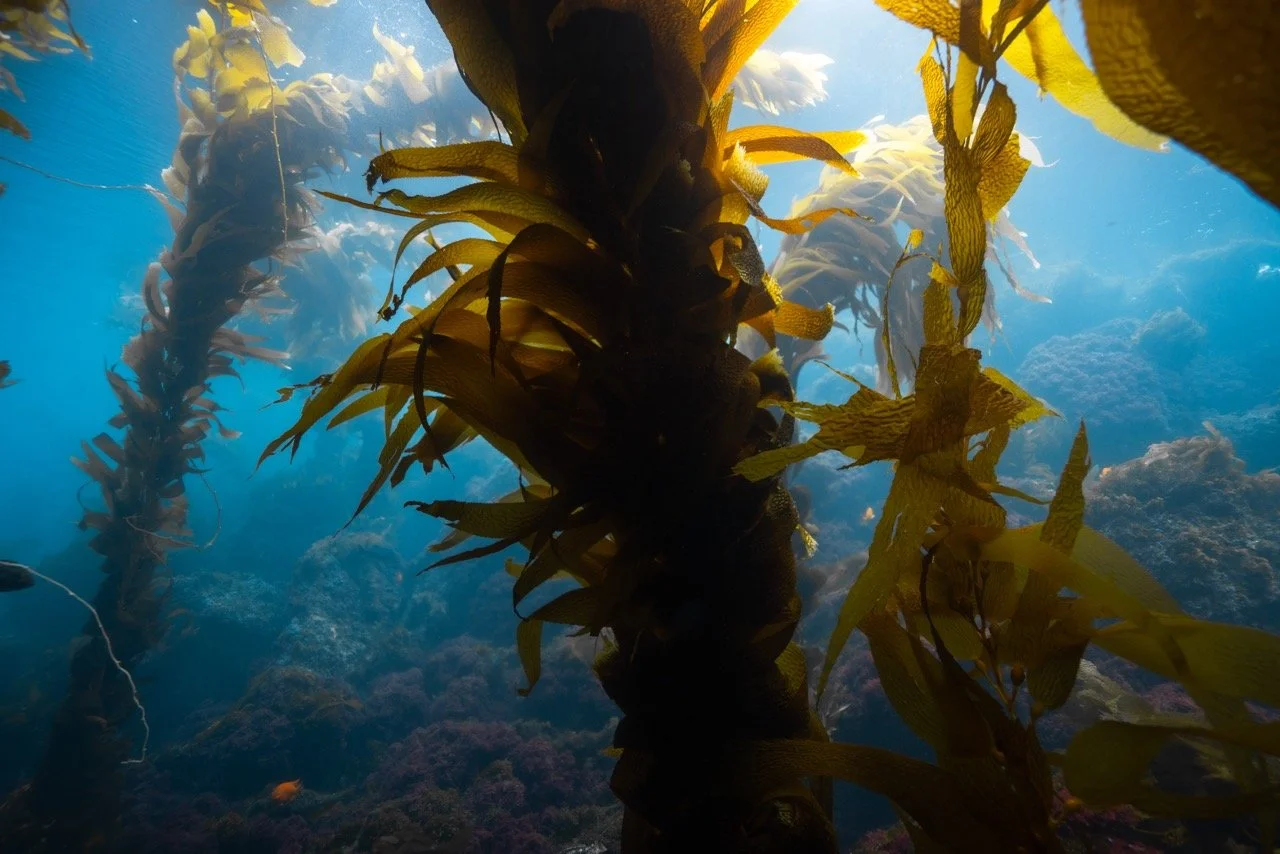
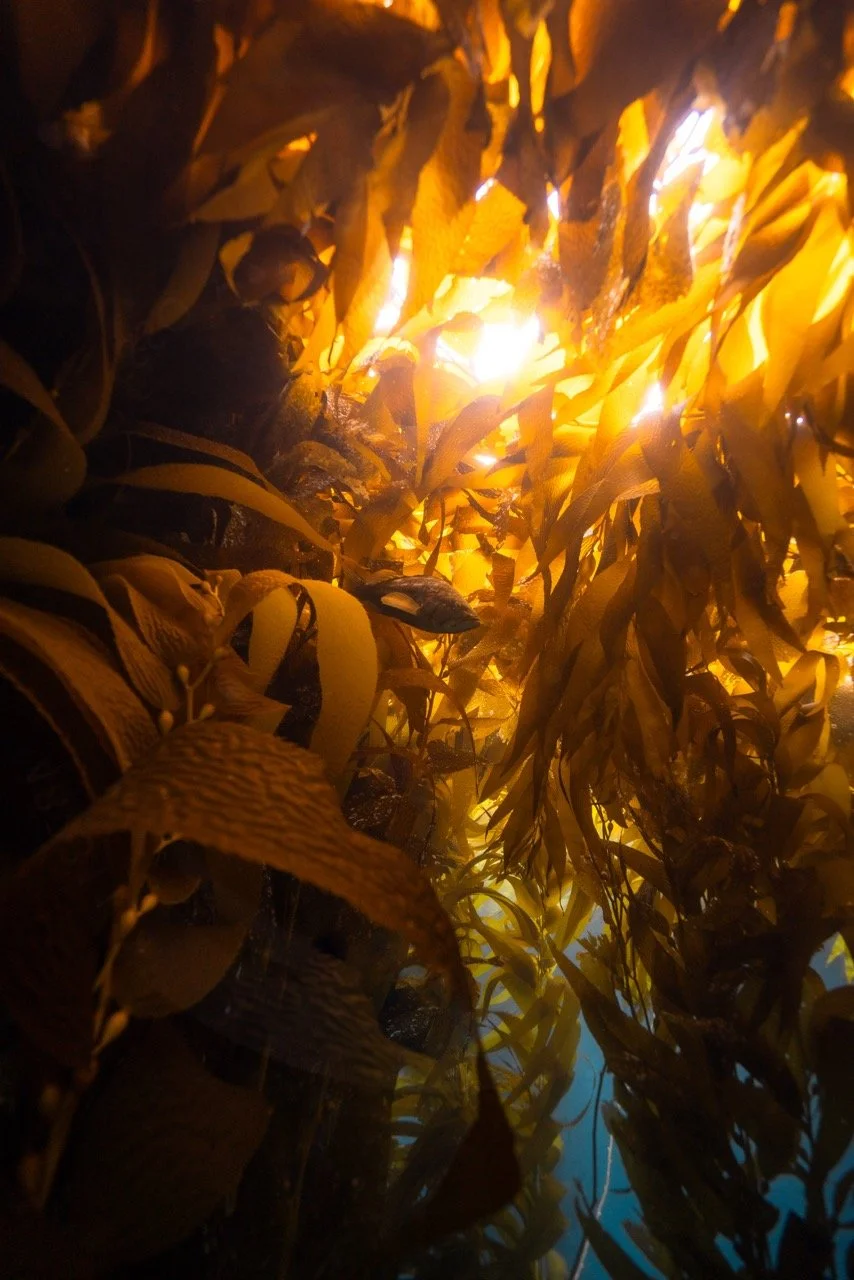
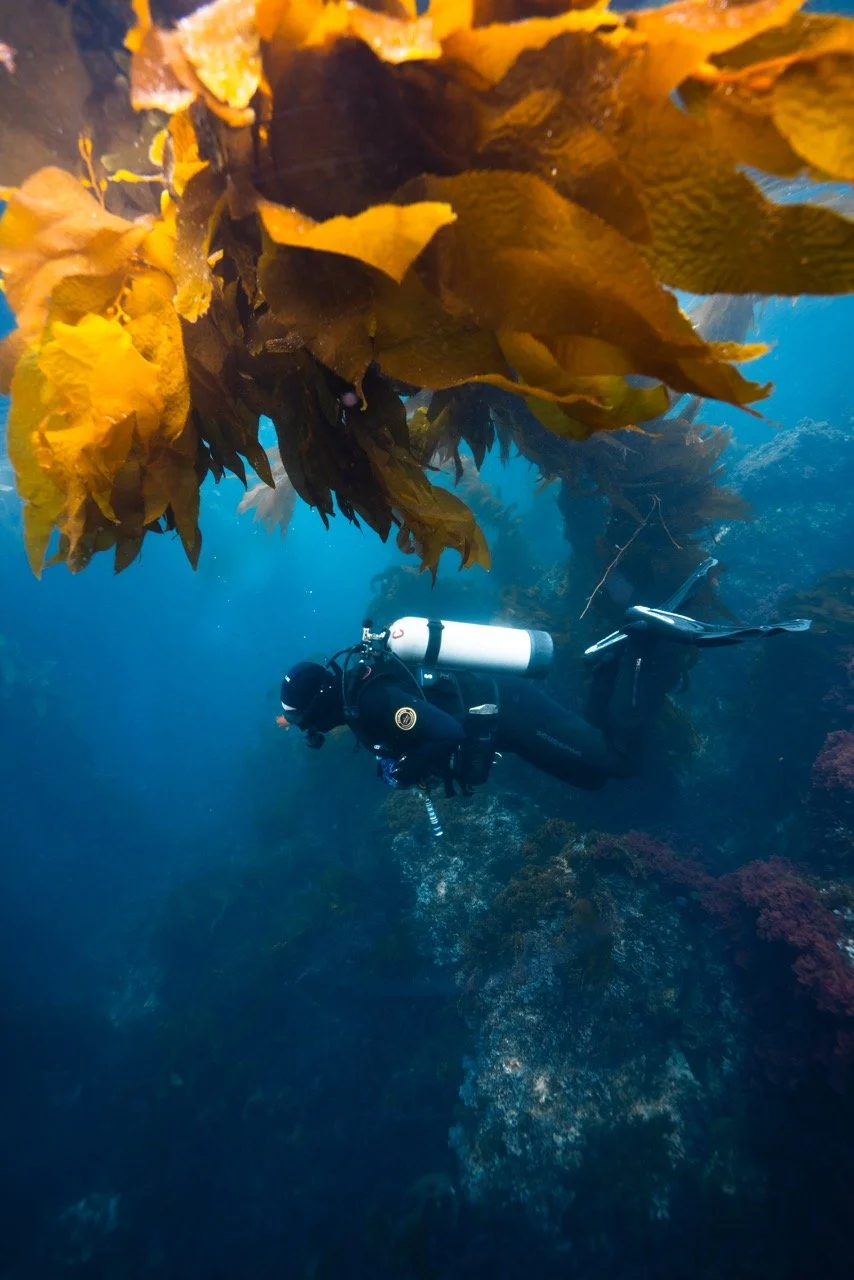
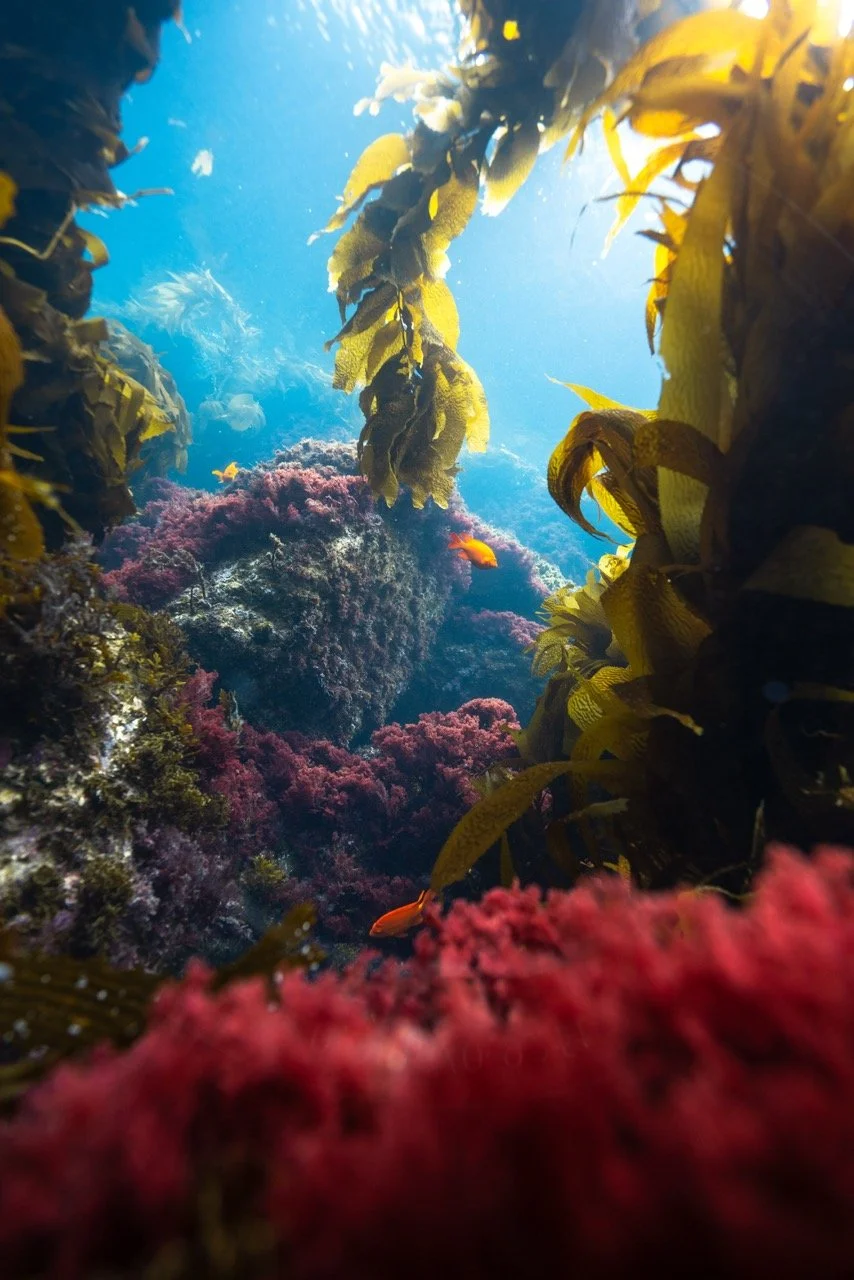
Off the coast of California, vast kelp forests rise from the seafloor, their golden fronds stretching toward the surface like trees reaching for the sun. Diving beneath these canopies—some towering more than 50 meters high - feels otherworldly. Light filters through the dense fronds the way sunlight passes through leaves in a forest, and there is movement and life shifting between every shadow.
Ecosystem
Though not as visible as forests on land, kelp forests play an equally vital role in supporting life and stabilizing the planet. Kelp absorbs up to twenty times more carbon dioxide per acre than terrestrial forests, making them one of the most powerful natural tools for storing carbon and slowing climate change, serving as an important blue carbon ecosystem.
These marine forests also serve as feeding grounds, nurseries and shelter for hundreds of species—from abundant fish and invertebrates to sea lions and seabirds. They protect coastlines from storms, sustain fisheries and fuel coastal economies. Yet their existence is increasingly fragile.
Threats
Rising ocean temperatures, pollution, and overharvesting threaten their survival. In many regions, sea urchins—once kept in check by predators like sea otters and sea stars—have overrun the seafloor, consuming kelp faster than it can regrow.
Future
Kelp forests are among the most productive ecosystems on Earth, but their future depends on our ability to protect and restore them. This photo story invites viewers to dive beneath the waves and experience the beauty, balance, and vulnerability of California’s kelp forests—illuminating why these blue-carbon sanctuaries matter, the power of designing and designating no-take zones, and why kelp preservation is essential for the health of our ocean and our climate.